A sliding door lock should match the door you already have. Start by deciding whether you need to repair the built-in latch, add a secondary lock at the jamb, use an OEM accessory for a known door model, or add a removable bar. A security bar can supplement a working primary lock, but it is not a substitute for identifying a broken lock or checking how the door opens in an emergency.
This guide covers the common lock categories for exterior sliding glass and patio doors. It focuses on fit, installation and everyday use rather than unsupported claims about a product being universally “most secure.”
Affiliate disclosure: This guide contains affiliate links. If you buy through them, BunyanSafe may earn a commission at no extra cost to you.
Choose the lock category before choosing a product
The quickest way to narrow the options is to identify where the device works. A replacement part, a jamb-mounted secondary lock and a track bar solve different problems. The table is a planning tool, not a substitute for an exact installation manual.
| If your situation is… | Start with… | Do not assume… |
|---|---|---|
| The handle or built-in latch no longer works | Exact replacement identification | A universal bar repairs the latch |
| You want an added lock between panel and jamb | Loop-lock reach and mounting check | Every patio jamb has the same gap |
| You own a listed Andersen gliding door | Compatible OEM foot-lock check | An Andersen part fits every slider |
| You need a removable secondary barrier | Usable span and release routine | A bar replaces the primary lock |
What type of sliding door lock do you have?
Most exterior sliding doors begin with a built-in latch or mortise-style lock inside the handle assembly. If that part is damaged, identify the door brand, handle layout, lock dimensions and handing before buying an add-on. A secondary device may add another layer of restriction, but it will not make a worn or misaligned primary lock function normally.
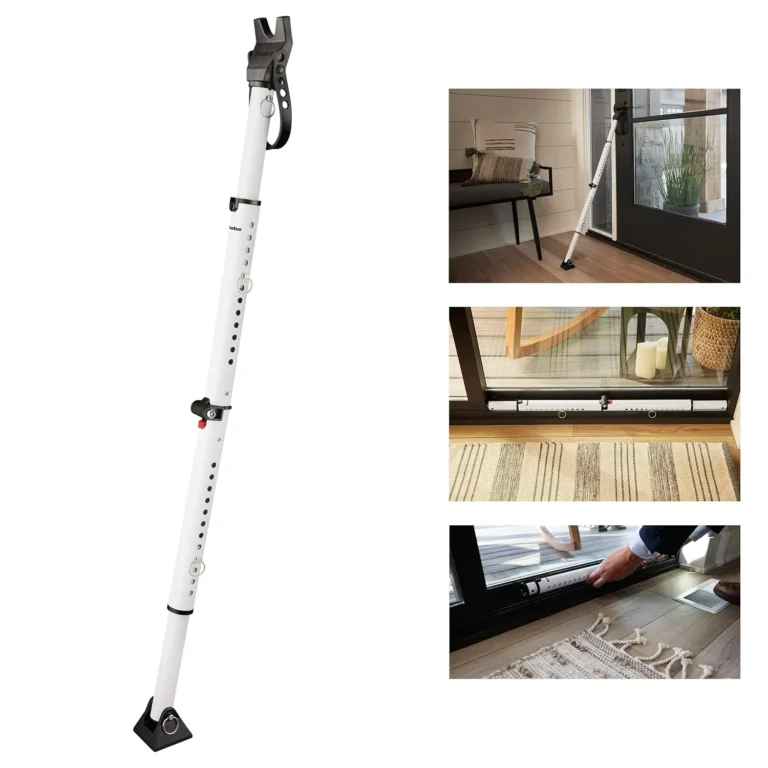
Next, look at the path between the moving panel and the fixed frame. A loop lock or foot lock works at a specific point on that path. A removable bar typically blocks the panel from moving when positioned as its instructions show. The product name alone does not tell you whether it suits your door.
Use this fit-before-feature decision tree
Use these questions in order. They help prevent the most expensive mistake in this category: choosing a product type first and discovering later that the door arrangement cannot use it.
- Does the primary lock close and latch? If not, document the existing hardware first. A replacement lock may be the actual need.
- Is the door brand and series known? When an accessory is model-specific, use the manufacturer’s compatibility list instead of a visual match.
- Where can a secondary device connect? Check the panel, jamb, track and surrounding trim. Record the relevant span or reach at that exact location.
- Will the household release it consistently? Practice the normal release from inside before relying on any add-on. A device that is awkward during an emergency is a poor fit even if it physically installs.
This is BunyanSafe’s core recommendation for the category: choose by the door’s geometry and existing hardware first, then compare product features. It is more useful than treating every sliding-door accessory as interchangeable.
Three secondary-lock examples and their fit limits
These examples represent three different approaches. They are not ranked, and none is a universal recommendation. Check the current product listing and the linked manufacturer documentation before ordering.
1. Adjustable security bar for a measured opening
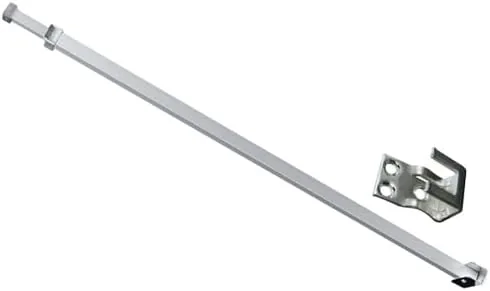
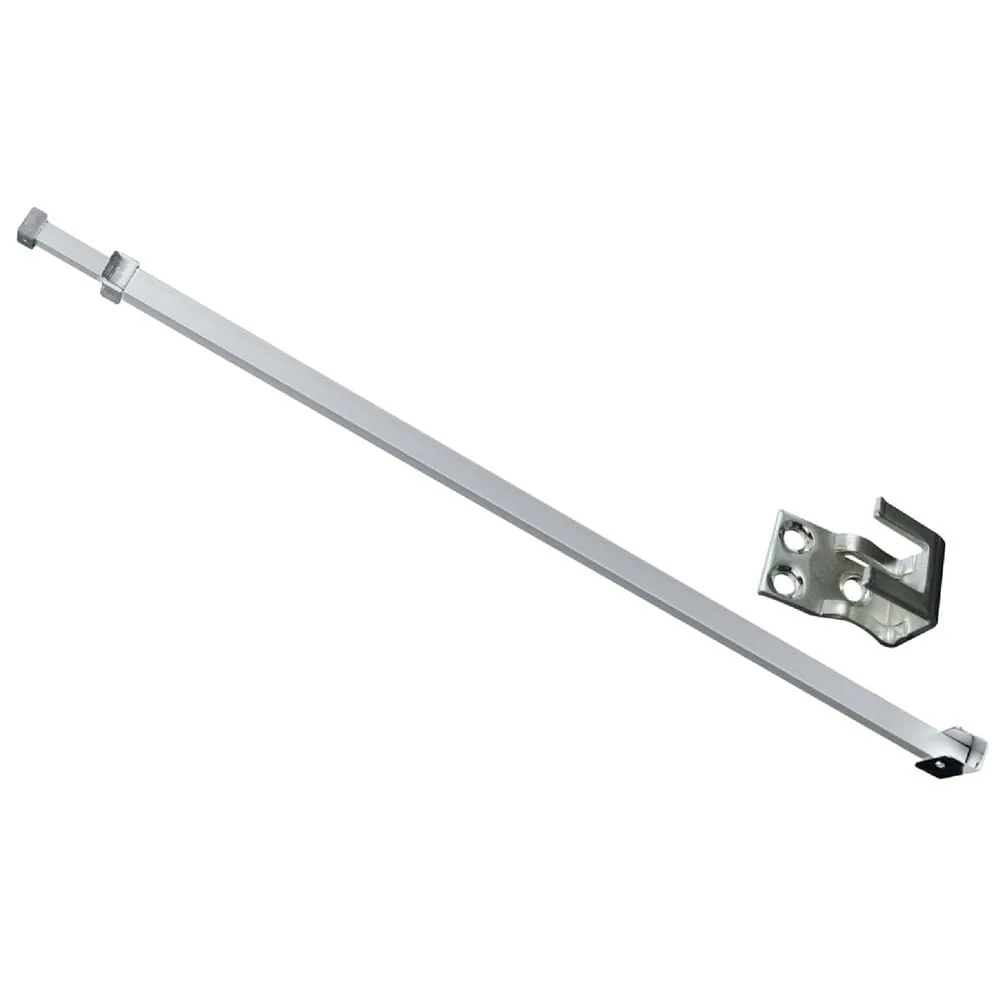
The Prime-Line U 9920 is an adjustable bar intended for sliding patio doors. Prime-Line lists this model with a 28–48 inch adjustment range. That range is only a starting point: measure the working span where the bar is meant to sit and check that the end fittings and track arrangement match the manufacturer’s instructions.

- Easy to install and provides backup security for your sliding patio door
- Adjustable to accommodate openings from 28 in to 48 in
- The adjustable feature allows you to safely enjoy fresh air by securing your door in an open position
Who this is not for: a household that has not confirmed the usable span, cannot access the intended bar position, or needs the bar to repair a failed built-in latch. A bar is a secondary device, not a replacement lock mechanism.
2. Loop lock for a compatible panel-to-jamb gap
Prime-Line’s U 9846 is a patio sliding-door loop lock with a stated 1-1/8 inch reach. Prime-Line describes it as a secondary security device. Its value is the defined connection between the panel and jamb; its limitation is that the required reach and mounting surfaces must exist on your exact door.

- SECONDARY SECURITY LOCKING DEVICE – This U 9846 Patio Sliding Door Loop Lock can be used on a patio sliding door as a se…
- CHILD-SAFE SECURITY DEVICE – This door loop lock can also be installed out of reach of children so they cannot open the …
- EASY INSTALLATION – Installation is quick and easy – additional security for your home or office doors are within reach!…
Who this is not for: anyone who has not measured the gap to the keeper or who wants a no-fit-check solution. If the loop cannot reach the keeper without forcing the door alignment, stop and verify the dimensions.
3. OEM foot lock for listed Andersen gliding doors
Andersen part 1997301 is an auxiliary foot lock, not a general replacement for any patio door. Andersen lists it for specified 200 Series Perma-Shield and Narroline, 400 Series Frenchwood, A-Series and E-Series gliding patio doors. The manufacturer says the pin engages into the track when depressed.

- Andersen Auxiliary Security Lock, Foot Latch
- Color: White
- Length: 3-3/4 Inches
Who this is not for: owners of another brand or an Andersen door outside the manufacturer’s compatibility list. Verify the exact door series and existing hardware before treating an OEM accessory as compatible.
When a security bar is the wrong first purchase
Do not start with a bar when the door will not latch, the rollers or track prevent full closure, or the primary hardware is visibly damaged. Those conditions can change the door alignment and affect both everyday operation and the fit of a secondary device.
Also avoid treating a portable bar as a promise of total protection. Master Lock’s instructions for its 270D folding bar explicitly say it is not designed as the primary locking device on an exterior door. That is a useful category-wide reminder: retain a working primary lock and use a supplemental device only in the manner its manufacturer supports.
How should a renter approach a sliding door lock?
First identify whether the proposed product needs screws, drilling or permanent brackets. Then review the lease and ask the property manager when required. “Removable” does not automatically mean every installation is permitted, and a product that changes an egress route deserves extra discussion with everyone in the household.
A renter who cannot alter hardware may prefer to focus on maintaining the existing latch, documenting a repair need for the landlord, and choosing only a device whose placement and removal are clear from the instructions. Do not drill near glass or modify the door frame based on a generic online diagram.
Keep everyday access and emergency exit usable
A secondary lock must work with the way the household leaves the home. Decide who will release it, where it will be stored when the door is in use, and whether children or guests understand the routine. The US Fire Administration recommends keeping doors and windows unobstructed and practicing an escape plan with everyone in the home.
If this patio door is part of an escape route, do not rely on a product listing alone. Review its release steps, consider local requirements and make sure the normal lock and door operation remain usable.
Frequently asked questions about sliding door locks
What is the best type of sliding door lock?
The right type depends on the problem. A broken built-in latch usually calls for exact replacement identification; a working door that needs a secondary device may suit a compatible loop lock, OEM foot lock or bar. “Best” without door dimensions and hardware details is not a reliable product recommendation.
Can I add a lock to a sliding glass door?
Often, but the accessory must match the door’s panel, jamb, track and installation surface. Measure the relevant gap or span and use the manufacturer’s compatibility information before buying.
Are sliding door security bars primary locks?
No. Treat a bar as supplemental unless the manufacturer of your exact door and device gives different instructions. Keep the primary lock maintained and confirm that everyone can release any secondary device safely.
How do I know whether a loop lock will fit?
Check the product’s stated reach, the distance to its keeper and the mounting surfaces at the panel and jamb. A listing photograph is not enough to confirm those dimensions.
Will an Andersen auxiliary foot lock fit another brand of door?
Do not assume so. Andersen’s compatibility list for part 1997301 names specific gliding patio-door series. Use the door manufacturer’s documentation for other brands.
How this guide was prepared
This is a document-based buying and compatibility guide, not a hands-on product test. We used Bing keyword research to identify the search intent, then checked HAP product resolution and manufacturer documentation for the examples. We did not test forced-entry resistance, make a “most secure” ranking or use retailer ratings as evidence.
Read our editorial policy for how BunyanSafe separates sourced information from testing. If you spot an incorrect compatibility detail, contact us with the relevant manufacturer document.
Before choosing a removable bar, use our sliding door security-bar measurement worksheet to check the working span, track clearance and contact points.