To measure for a sliding door security bar, close the door and identify the exact space the bar will occupy. Measure between its intended contact points, then compare that distance with the adjustment range for the product’s sliding-door configuration. The overall width of the doorway is not automatically the length you need.
A bar that reaches across a gap still needs the right end fittings, room in the track and a suitable installation method. Use the worksheet below before you order. It helps you separate a length match from a complete compatibility check.
Choose the installation type before measuring
A removable track bar and a bracket-mounted bar need different measurements. Start with the manufacturer’s installation diagram, identify its contact or mounting points on your door, and measure there.
| Bar type | What to measure | Also check |
|---|---|---|
| Removable track bar | Gap between specified contact points | Track clearance and end fittings |
| Bracket-mounted bar | Span between specified mounting points | Mounting surfaces and fasteners |
| Dual-purpose security bar | Sliding-mode span in its instructions | Which attachments must be removed |
| Unclear or inaccessible track | Record the door arrangement first | Ask the door or bar manufacturer |
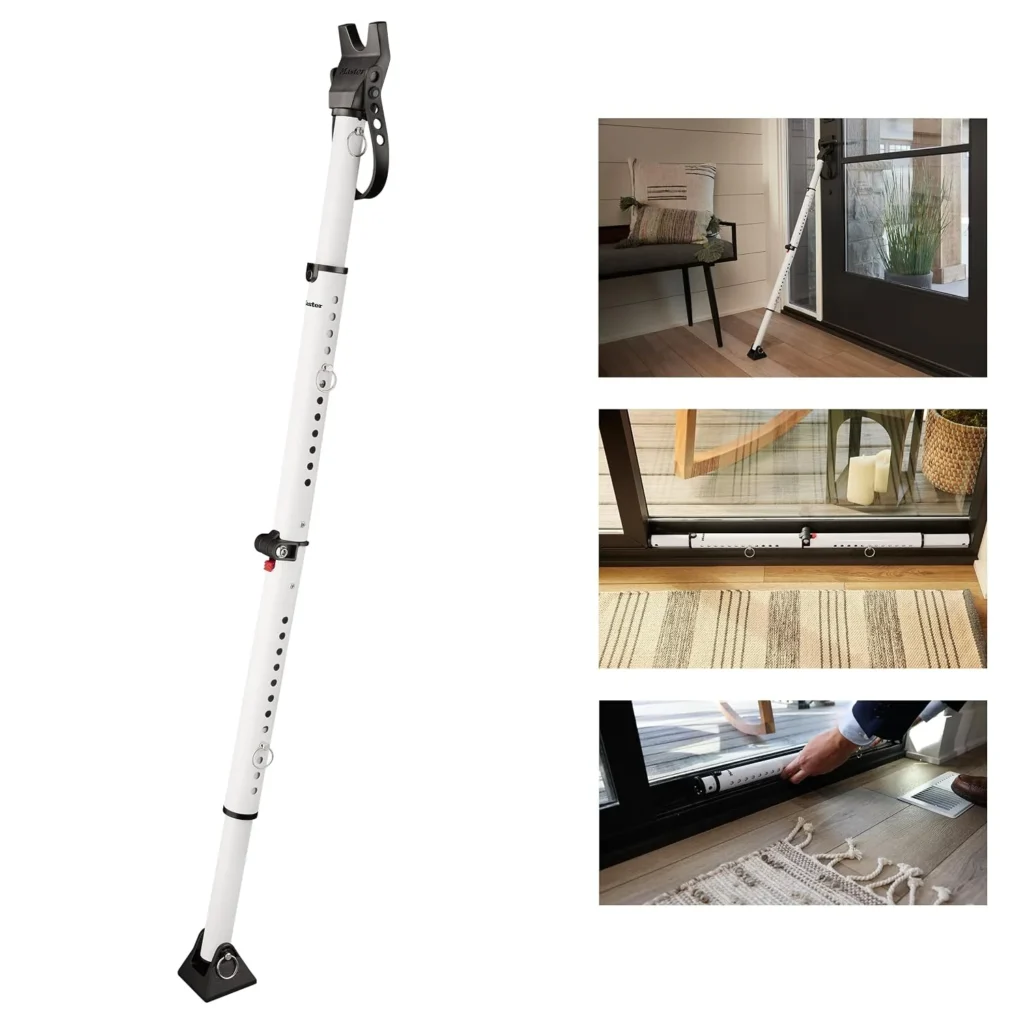
For example, Master Lock’s 270D instructions use different setups for hinged and sliding doors. The sliding setup removes the yoke and foot. That is why a measurement taken with a hinged-door attachment fitted may be the wrong reference for a patio door. Follow the document supplied for your exact model.
Record these measurements before shopping
Write down the working span, track clearance and intended contact points. Keep a photograph alongside those measurements so you can compare your actual door with the installation drawing, rather than relying on memory.
- Close the sliding panel fully. Use the closed position as your reference. If the door will not close or latch normally, resolve that fault before choosing an add-on device.
- Identify the moving panel. Note which panel slides and which remains fixed. Photograph the track from inside. If the proposed bar cannot occupy the position shown in its instructions, do not assume another channel is equivalent.
- Mark the proposed contact points. For a track bar, use the surfaces indicated by its manufacturer. For a mounted model, use the specified bracket positions. Do not guess screw locations around glass.
- Measure the span. Keep the tape aligned with the proposed bar position. Record the units and repeat the measurement. Do not substitute the outside frame width or the visible glass width.
- Check the surrounding space. Record the available track width and depth, and note protruding handles, trim or other obstructions. Compare the full end fitting as well as the tube diameter with that space.
- Check removal and storage. Decide where the bar will go when the door is in use. A product that can be fitted but is awkward for your household to release may be the wrong choice.
Use this sliding-door measurement worksheet
Fill this in for each door separately. Two patio doors that look similar can have different tracks and hardware, so one completed worksheet should not stand in for the whole house.
| Check | Your door | Product evidence to match |
|---|---|---|
| Closed-door working span | _____ inches / mm | Sliding-mode adjustment range |
| Clear track width and depth | _____ / _____ | Tube and end-fitting dimensions |
| Contact or mounting surfaces | _____ | Installation diagram |
| Panel arrangement | _____ | Compatible door configuration |
| Drilling or brackets required | _____ | Included hardware and instructions |
| Release method | _____ | Usable by your household |
Keep the product’s model number with the worksheet. A listing can contain multiple sizes, packs or revisions. Match the selected variant to the document you used, particularly if a retailer combines several products on one page.
How to compare your number with a listed range
Your measurement must fall within the applicable range, but that is only the first check. Confirm whether adjustment is continuous or uses fixed positions, and whether the published dimensions include the attachments needed for your installation.
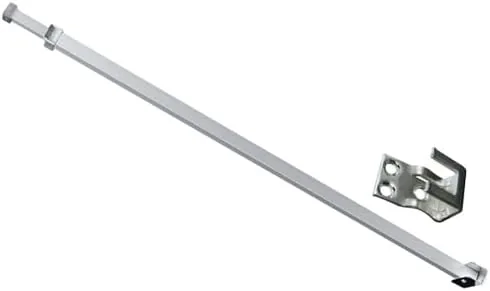
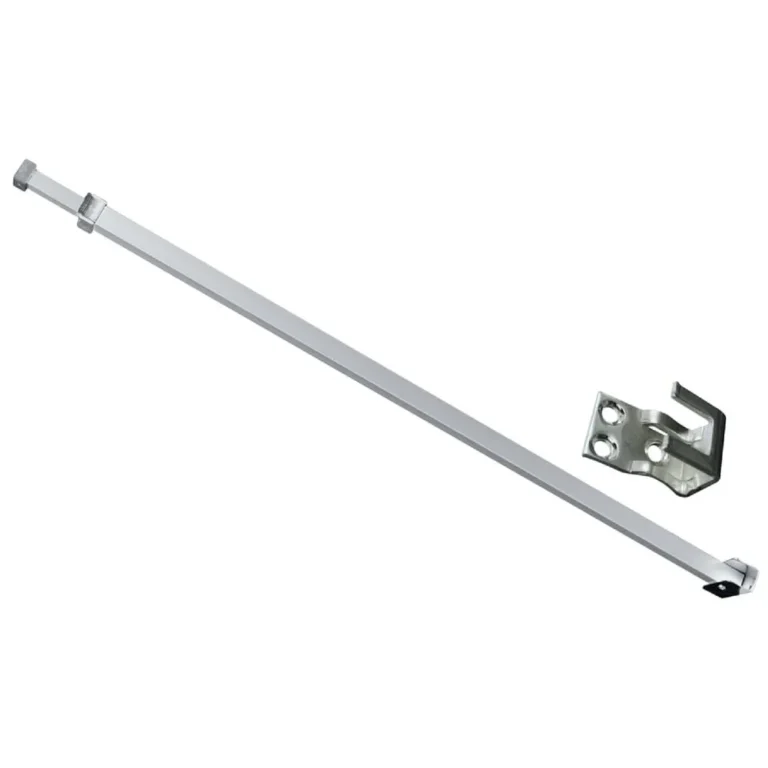
Prime-Line lists its U 9920 adjustable security bar for openings from 28 to 48 inches. That is a specification for that product, not a universal range for patio-door bars. A matching span does not establish that its installation method suits your frame.
As a hypothetical example, a 35-inch gap lies inside a 28–48-inch interval. You would still need to check the mounting arrangement and permitted adjustment positions. If your measurement is exactly at a stated minimum or maximum, ask the manufacturer about the fit instead of inventing extra clearance or cutting the bar.
A product example to check against your worksheet
The Master Lock 270EC is listed as an adjustable bar for hinged and sliding doors. It is one product to investigate after measuring, not a universal recommendation. Confirm the exact 270EC instructions and sliding-mode dimensions before ordering; do not transfer specifications from a similarly named model.

- Heavy duty, dual-function door security bar prevents forced entry on hinged, patio and sliding doors; Door stopper secur…
- Door security bar features innovative folding design for compact storage and portability, Adjusts from 25-1/2in to 43-1/…
- Adjusts up to 43-1/2 in. (1.1 m) for hinged doors, and extends up to 39 in. (1 m.) for sliding doors; Flexible handle st…
Who should skip this option: anyone whose door arrangement or required span is not confirmed by the exact model’s instructions. A different device may be needed if the track is inaccessible or the household cannot use the release comfortably.
Keep the normal lock and escape route usable
Supplemental security should be considered together with everyday access and emergency exit needs. A good dimensional fit alone does not establish that an installation is appropriate for your home.
Master Lock describes the 270D bar as additional security used with existing door hardware. The US Fire Administration’s escape-planning guidance says to keep doors and windows unobstructed and practice the escape plan with everyone in the home. Check how any proposed device affects that plan before relying on it.
For rented property, check the lease and obtain permission where required before drilling or adding brackets. Calling a product removable does not establish permission for every rental or suitability for every exit.
Common measurement questions
Should I measure the whole doorway?
Measure the span at the bar’s intended position, using the contact or mounting points in its instructions. Doorway width is useful background information, but it may describe a different distance.
Can I use the range for hinged doors?
Only if the manufacturer confirms it also applies to the sliding configuration. Attachments and positioning can change between configurations.
What if the product listing leaves out track dimensions?
Ask the manufacturer for the missing dimensions or select a product with clearer documentation. Do not turn an unknown fit into a recommendation based only on a photograph.
Does a correctly sized bar prevent every kind of entry?
No such conclusion follows from its dimensions. This guide checks fit, not forced-entry resistance, glass protection or the condition of the existing lock.
How this guide was prepared
This is a document-based compatibility guide, not a hands-on product test. We consulted manufacturer instructions and specifications plus US Fire Administration guidance. The measurement worksheet is our own planning aid; it does not replace the instructions supplied with your chosen product.
See our editorial policy for how we distinguish sourced information from testing. If a specification or model reference needs correction, send the BunyanSafe team the details.