Disclosure: This guide contains affiliate links. If you buy through them, BunyanSafe may earn a commission at no extra cost to you.
An emergency kit is useful only if it supports the people in your home through the disruption you are actually planning for. A premade bag can provide tools and a starting point, but it cannot know your household’s water, medicine, food, mobility, or pet needs. Use this guide to build a three-day home kit for winter outages, then compare specific add-ons without mistaking a product label for a complete plan.
We used FEMA’s public supply checklist and NOAA’s weather-radio guidance, alongside product titles resolved by an approved affiliate tool. We have not hands-on tested the products or verified any kit’s full contents by opening the package. Check the exact listing and current manual before buying.
Quick picks: fill a real gap
- Ready-made starting bag: Ready America 70490, listed for two people and three days; audit its exact contents against your household.
- First-aid supplies: BAND-AID all-purpose 160-piece kit; check whether it meets your family’s needs.
- Weather information: Raynic emergency radio with listed AM/FM/NOAA reception and multiple charging methods; verify local reception and alert functions.
- Extra water-storage option: waterBOB bathtub bladder, a fill-ahead product rather than stored water ready at all times.
- Dedicated light: Duracell flashlight with multiple listed illumination modes; confirm the power source and keep it accessible.
Start with people and days, not a product count
FEMA’s basic emergency supply checklist recommends at least one gallon of water per person per day for at least three days, covering drinking and sanitation. For four people, that’s a minimum planning figure of 4 × 3 = 12 gallons. Some people, pets, heat, or medical needs may require more. A compact premade backpack rarely contains that volume of water; plan storage separately.
FEMA also calls for at least a three-day supply of nonperishable food, a battery-powered or hand-crank radio and NOAA weather radio with a tone alert, flashlights and spare batteries, a first-aid kit, and other practical supplies. This is a starting list, not a claim that any listed product below includes every item.
Write down everyone who might be at home during an outage. Include infants, older adults, people who depend on powered equipment, pets, and overnight guests. Then note medications and supplies that need replacement dates or a different storage method. If a person depends on medical power, get a device-specific backup plan from the supplier and care team rather than relying on a generic kit.
A three-layer home emergency kit
| Layer | What it covers | What to check |
|---|---|---|
| Household basics | Water, food, sanitation | People, days, storage dates |
| Warning and light | Official alerts, radio, lamps | Reception, batteries, charging |
| Personal needs | Medicines, documents, pets | Individual plans and access |
The three layers make gaps visible. A kit with many small tools may look complete while lacking drinking water. A powerful light is useful, but it will not tell you whether a winter storm warning has changed. A radio with weather-band reception helps with information, but it still needs working batteries or another supported power source.
Winter additions for an outage or storm
Pack warm blankets or sleeping bags for each person, plus extra layers, hats, and gloves. Plan which room your household can keep warm most efficiently, and check your space-heater safety options before an outage. If you may need to leave, keep ice melt or sand where you can reach it and fuel your car before a forecast storm.
Don’t use an oven, charcoal grill, camp stove, or generator indoors to heat the home. They can create a deadly carbon monoxide hazard. Keep the kit’s winter plan separate from any appliance instructions, and follow official local alerts if conditions change.
Five products to compare by the job they do
| Product | Role | Do not assume |
|---|---|---|
| Ready America 70490 backpack | Starting kit for two people | All water, food, or personal supplies included |
| BAND-AID 160-piece first-aid kit | Basic wound-care supplies | Replaces your medication plan |
| Raynic emergency weather radio | Weather-band information | Automatic tone or SAME alert without verification |
| waterBOB bathtub bladder | Additional water storage if filled early | Water ready without advance notice |
| Duracell flashlight | Portable illumination | Emergency runtime from lumen rating |
Ready America 70490: a starting bag for two
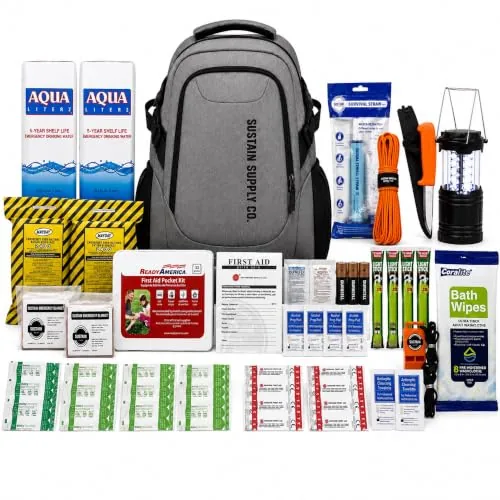
The validated listing names this an emergency backpack for two people and three days. It’s a useful organizing starting point if you want one portable bag near an exit. Check the current contents line by line against FEMA’s list before relying on it: the label alone doesn’t verify water volume, food suitability, batteries, or medication needs.
A two-person label does not fit a four-person household. If your household is larger or has pets, add supplies deliberately. Even for two people, note where separate stored water and personalized items will live.

- COMPLETE 72-HOUR SURVIVAL KIT FOR 2 PEOPLE – Designed to sustain two adults for three full days with long shelf-life foo…
- PREMIUM DISASTER PREPAREDNESS SUPPLIES – Includes first aid kit, lighting, protective gear, tools, and critical survival…
- READY-TO-GO GRAB & GO EMERGENCY BAG – Durable, organized backpack keeps all survival gear compact and portable, making i…
It’s a poor choice as your entire preparedness plan if you won’t audit and maintain it. The bag can organize items; your household plan determines whether they’re enough.
BAND-AID all-purpose 160-piece kit: basic first-aid layer
This validated listing identifies a portable 160-piece first-aid kit. It’s more focused than a general emergency backpack, which makes it easier to see the difference between wound-care supplies and food, water, light or communication needs.
Confirm the exact contents and expiry dates when it arrives. Don’t infer that piece count covers every injury or replaces prescriptions, training, or emergency services. Anyone with a particular medical requirement needs a separate plan with qualified guidance.

- Be prepared for anything: All-Purpose Portable Compact First Aid Kit by BAND-AID Brand delivers an assortment of 160 pie…
- Portable and compact: Refill this durable, plastic case with your selection of organized and accessible first aid essent…
- Emergency kit essentials: Consider BAND-AID Brand as your option for trusted first aid supplies, such as cleansing wipes…
If the household already has a first-aid box, inspect and restock it before buying another. Duplicating one layer while leaving water or official alerts uncovered will not improve the whole kit.
Raynic emergency radio: check local NOAA reception
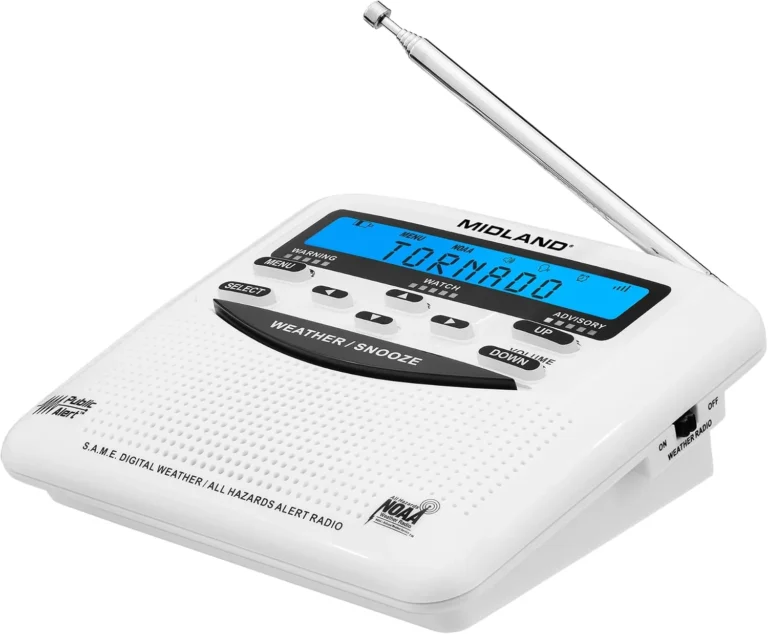
The Raynic listing describes AM/FM/NOAA reception, solar and hand-crank charging, USB/USB-C features, light and SOS functions. It may be useful when phones or home internet are unreliable, but these listing features do not establish how long its battery lasts in your use or whether it has an automatic NOAA tone alert.
NOAA broadcasts on specific weather frequencies. Test reception at home, learn the controls, and inspect the radio’s supported charging methods. If you need warnings to wake you at night, verify an actual tone-alert and location-filtering feature on the exact model rather than assuming every NOAA-capable receiver has one.

- NOAA-Certified for Emergency Use: Stay safe with real-time alerts from the National Weather Service. This weather alert …
- Faster Solar Charging & High-Efficiency Crank: The hand crank radio features a 5× larger high-efficiency monocrystalline…
- Enhanced Signal Reception: Stay Informed Wherever You Are. This am fm radio features a high-sensitivity receiver and pre…
Keep written local station details with the radio. Don’t leave an untested radio sealed in packaging until a storm arrives.
waterBOB bathtub bladder: water when there is advance warning
The waterBOB listing describes a bathtub bladder with up to 100-gallon capacity and a hand pump. It is a different kind of preparedness tool from filled water containers: you must have usable tap water and time to fill it before the supply is interrupted.
That makes it an extra storage option for some forecast events, not your only drinking-water plan. Check that your bathtub fits the liner, follow the product’s sanitation and storage instructions, and keep your baseline supply elsewhere. A product’s maximum volume is not a guarantee that your tub or home setup will hold that amount.

- Space-Saving Up To 100-Gallon Emergency Water Storage: Transform your existing bathtub into a clean, safe water storage …
- Sealed Food-Grade Liner Keeps Water Fresh Up to 16 Weeks: Heavy-duty, BPA-free plastic liner meeting USFDA food-grade gu…
- Trusted by 500,000+ Families and Featured on Major Media: As the original patented emergency water storage solution (U.S…
Skip this approach if you cannot access or fill a tub when warned, or if a person in the home needs the tub for accessibility. Filled containers kept ready serve a different purpose.
Duracell flashlight: a light you can find quickly
The Duracell listing describes a flashlight with multiple illumination modes and three available power-supply methods. That makes it a candidate for the dedicated light layer, but the title’s lumen claim does not tell you how long it will run in your chosen mode.
Check the exact batteries or charging equipment required for the version you receive, then store them as directed. Keep the light in a location reachable without crossing a dark room. If other household members cannot operate the mode switch easily, a simpler light may serve them better.

- 2000 Lumens LED Flashlight with 360 Degree and 180 Degree Lighting for Camping, Fishing and Emergency Use, 6 Light Modes…
- – 3 lighting levels – Waterproof – Built-in USB and USB-C ports – Battery not included Power
- Solar Rechargeable Battery
Test it on the kit’s maintenance dates. A phone flashlight helps, but it consumes a communication device’s battery and can be inconvenient when both hands are needed.
Water and food: the pieces kits often leave out
Use the one-gallon-per-person-per-day figure to make a household quantity first. Decide where you’ll keep the water, how you’ll access it if utilities fail, and how you’ll rotate or inspect containers. Buy a container that fits your storage plan, not simply the largest one listed online. Leave space for a smaller portable supply if you need to leave home.
Choose foods household members will actually eat without cooking, and include a manual can opener if any food is canned. Check allergies, infant feeding, and pet supplies. Note expiration dates on a visible list, then review the kit at a regular time of year. A frozen meal in a powered freezer is not a substitute for shelf-stable supplies during a long outage.
Weather alerts when the internet fails
NOAA Weather Radio broadcasts official warnings, watches, and forecasts. NOAA notes that features such as tone alert, SAME location filtering, and battery backup can make a receiver more useful for unattended warnings and power failures. Those features are not interchangeable: a radio that can tune weather broadcasts does not necessarily wake you with an alert.
Before choosing a radio, check that it receives a local transmitter, the exact alert function, required batteries, and whether the radio will operate while the power is out. Test it in the part of the home where you will keep it. Phones remain useful, but they are not the only notification path when cell service or home internet is unavailable.
Light, charging, and safe heat are separate plans
Keep a flashlight or lantern where someone can find it in the dark. Make sure the people who need it know where it is and how to turn it on. Check the battery type and store compatible spares where the product instructions permit. A light that has sat in a drawer for years is not a tested light.
A battery station may help charge small devices or run selected essentials. Our portable power station guide shows how to calculate energy needs instead of assuming a large watt rating means long runtime. Recharge plans and device compatibility need separate checks.
Never use a gas generator, charcoal grill, or camp stove indoors for power or heat. Carbon monoxide can build up without warning. Our carbon monoxide detector guide explains alarm planning, while the generator’s own instructions and official guidance determine safe placement outdoors.
Black Friday tip: if you shop holiday sales, use them to fill real gaps in your kit, such as a weather radio, flashlights or a power bank. Buy against your checklist, not the deal list: prebuilt kits can repeat items you already own and still leave out water, medications and copies of documents. Check the current price on Amazon before you buy.
Where to store the kit
Pick a location household members can reach without electricity, a garage door opener, or a ladder. Heavy water containers can stay in a different accessible spot if their location is written on the kit. Keep a smaller grab-and-go bag for copies of documents, needed medications, and personal items, but do not confuse that portable bag with your home’s full three-day supply.
If a flood or winter weather might block one exit, consider whether a second access point makes sense for your home. The point is not to scatter supplies so widely that nobody can find them. Write a short map and review it with the household.
Maintenance calendar
Choose two dates a year to inspect the kit. Check food and water storage instructions, battery condition, radio reception, flashlight operation, medication dates, and the current size of children’s clothing. Update paper contacts and printed maps. Replace items after they are used, not only after they expire.
Practice one short scenario: the power fails after dark, phones have limited charge, and the family needs official weather information. Can someone locate the light, hear an alert, reach the water, and contact a trusted person? The exercise will show more than a product photo can.
Frequently asked questions
How much water should an emergency kit hold?
FEMA’s baseline is at least one gallon per person per day for at least three days. Adjust upward for household needs and circumstances.
Is a premade emergency kit enough?
Usually it is a starting point. Check its exact contents and add the household’s water, food, medications, documents, and individual supplies.
Do I need a NOAA weather radio?
It’s a useful independent source of official weather information. Compare tone-alert, local reception, and battery-backup features on the exact model.
How often should I inspect my supplies?
Set recurring check dates and follow each product’s replacement or storage instructions. Recheck immediately after using anything from the kit.
Should the whole kit be in one bag?
Not necessarily. Water is heavy. Keep supplies accessible, label their locations, and maintain a smaller portable set for evacuation.
Can a battery station replace a generator?
That depends on the devices and duration. Calculate the electrical load and energy needs; do not assume one device can cover a whole home.
Build the plan before filling the bag
Count people, days, water, and essential needs first. Then add a reliable way to receive official alerts, light to move safely, and a realistic power plan. Compare product listings only after those gaps are clear. The best kit is the one your household knows how to find, maintain, and use.