Disclosure: This guide contains affiliate links. If you buy through them, BunyanSafe may earn a commission at no extra cost to you.
A smoke detector gives a household warning to escape a fire, but buying one is only part of the job. The right choice depends on bedrooms, home levels, existing wiring and how alarms work together. This guide compares five current alarm types and the checks to make before ordering or installing one.
We reviewed product-listing information available through approved affiliate tools and public guidance from CPSC and the U.S. Fire Administration. We did not hands-on test these alarms. Always follow the exact manual, local code and installer guidance for the model you choose.
Quick picks: choose by your home’s setup
- Whole-home hardwired project: BRK SMI100-AC 12-pack—confirm existing wiring compatibility and battery-backup details.
- Six hardwired locations: SMI105-AC 6-pack—confirm its listed 10-year battery and wiring compatibility.
- Interconnected smoke and CO: X-Sense SC06-W 6-pack—confirm the supported network.
- One combination location: X-Sense SC01—map smoke and CO locations first.
- Smart-home research: Heiman Matter over Thread—verify hub requirements.
Where should smoke detectors go?
CPSC and USFA recommend working smoke alarms inside every bedroom, outside each sleeping area and on every home level, including the basement. Interconnected alarms are preferred: when one sounds, they all sound. Treat a replacement alarm as part of a whole-home plan, not an isolated product choice.
Before ordering, walk through the home and mark bedrooms, sleeping areas and levels. Note whether existing alarms are hardwired, battery-operated or part of an interconnect system. Do not assume a new alarm will communicate with an older network just because both use the word “interconnected.”
USFA says alarms should be replaced 10 years from their manufacture date and tested monthly with the test button. Read USFA’s smoke-alarm guidance for placement, power options and maintenance.
Smoke detector comparison at a glance
| Model | Type to compare | Check first | Best next step |
|---|---|---|---|
| BRK SMI100-AC 12-pack | Hardwired interconnect | Wiring and battery backup | Qualified installer |
| SMI105-AC 6-pack | Hardwired alarm set | Listed 10-year battery | Map the whole home |
| X-Sense SC06-W 6-pack | Smoke + CO network | System compatibility | Read network instructions |
| X-Sense SC01 | Combination alarm | Placement plan | Cover all required areas |
| Heiman S1-TM | Matter over Thread | Hub requirements | Keep audible alarm primary |
1. BRK SMI100-AC 12-pack hardwired interconnect alarms
Who it may suit: A homeowner planning a multi-location hardwired project and comparing a listing for a 12-pack with hardwire interconnect and battery backup. Check model, connector, wiring and local requirements before purchase.
Who this is not for: A renter or homeowner who plans to guess about existing wiring. USFA says only qualified electricians should install hardwired alarms.
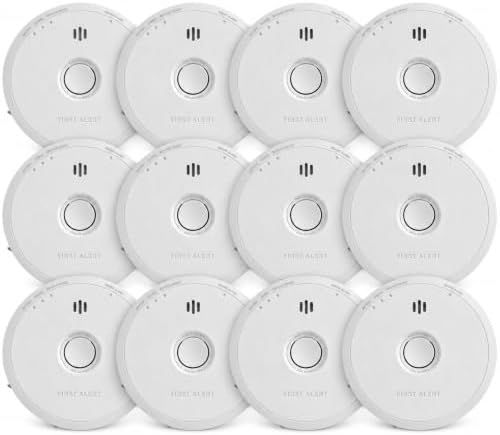
- SMI100-AC, Hardwire Interconnect Smoke Alarm with Battery Backup, 12-Pack
Keep the old alarm’s model and manufacture-date details before comparing replacements. A backup battery does not remove the need for monthly tests.
2. SMI105-AC 6-pack hardwired smoke-alarm set
Who it may suit: A project that needs six compatible smoke-alarm locations and is comparing a listed 6-pack hardwired set with a 10-year battery. A set can help keep model family and dates consistent across a home.
Who this is not for: Someone replacing one alarm without checking the existing system. A multi-pack does not replace a plan for bedroom, hallway and level coverage.

- First Alert’s Precision Detection advanced sensing technology complies with new industry standards to reduce cooking nui…
- 10-Year battery backup provides continuous protection during power outages
- Through early warning interconnect, when one alarm sounds, all compatible* alarms will sound
List every required location before opening packaging. If an installer finds a wiring or placement issue, resolve it rather than using fewer alarms than the home needs.
3. X-Sense SC06-W 6-pack interconnected smoke and CO detectors
Who it may suit: A household comparing a listed 6-pack of interconnected smoke and carbon-monoxide detectors. Combination alarms can simplify a location, but smoke and CO placement needs are not identical. Map both before deciding.
Who this is not for: Anyone assuming “interconnected” means every alarm in the house will work together automatically. Confirm supported alarms, network method and accessories in the exact manual.

- Please Note: SC06-W supports wireless interconnection but does not have Wi-Fi, or base station connection
- 10-year Sealed Battery: This wireless alarm features a 10-year lithium battery and will give a low battery warning; test…
- Wireless Interconnection: When one alarm sounds, all alarms will go off
The practical limitation is network planning. If alerts are needed across several levels, verify the compatible system before mixing in any new alarm.
4. X-Sense SC01 smoke and carbon monoxide detector
Who it may suit: A person comparing a single listed combination smoke-and-CO alarm for a defined location. It can help in an appropriately selected place, as part of a plan that still covers every sleeping room and home level.
Who this is not for: A buyer who expects one combination alarm to cover a multi-level home. One unit cannot provide warning everywhere unless it is part of a correctly planned system.

- Please Note: SC01 is a basic standalone unit; it does not support wireless interconnection, does not have Wi-Fi, and can…
- 10-Year Sealed Battery (Not AC Hardwired): Contains a long-life lithium battery that powers the device for its entire 10…
- 2-in-1 Protection: The smoke and carbon monoxide detector is equipped with both photoelectric smoke sensor and electroch…
Check the manufacture date when any alarm arrives and record its replacement date where the household can find it. Do not remove a battery to silence a nuisance alarm; use the manual’s hush guidance and address the cause.
5. Heiman Matter over Thread smoke detector
Who it may suit: A smart-home user researching a smoke detector listed with Matter over Thread and temperature/humidity sensing. Smart features may add status information, but the alarm still must be installed, tested and heard where people sleep.
Who this is not for: Anyone without the required ecosystem or a reliable setup process. Never let app convenience delay a working local alarm or a fire-escape plan.

- 【Matter & Thread Smart Smoke Detector】Compatible with AppleHome, GoogleHome, Alexa, SmartThings, Homey, and Home Assista…
- 【Dual-Beam Photoelectric Smoke Alarm】This photoelectric smoke alarm accurately detects smoldering fires and fine smoke. …
- 【UL217 10th Ed. Certified】This fire alarm meets strict UL and FCC standards (CSFM listed). Features UL94 V-0 flame-retar…
The edge case for smart alarms is dependence on setup and notifications. Treat phone alerts as an addition to—not a replacement for—an audible alarm, escape route and household practice.
Black Friday tip: if you shop holiday sales for smoke alarms, first check the manufacture date on the back of the alarms you already have; NFPA advises replacing smoke alarms 10 years after that date. Then make sure a multi-pack fits your setup: interconnect only models the maker lists as compatible, using its approved wiring or wireless system. Different brands usually cannot interconnect. Check the current price on Amazon rather than relying on the discount label.
Smoke detector checklist before you buy or replace one
- Count bedrooms, sleeping areas and home levels before selecting quantities.
- Check the existing alarm’s manufacture date; replace alarms older than 10 years.
- Identify hardwired, battery and interconnect requirements before choosing a model.
- Read the exact manual for placement away from cooking appliances, bathrooms, windows and fans.
- Plan monthly testing and battery maintenance where applicable.
- Create and practice a home fire-escape plan; an alarm gives warning, not an exit route.
- Use a qualified electrician for hardwired work rather than improvising wiring changes.
Photoelectric, ionization and combination alarm choices
USFA describes two basic smoke-alarm sensing types: ionization and photoelectric. They respond differently to fire conditions, and a homeowner cannot know in advance which type of fire might occur. That is why the broader placement, maintenance and escape plan matter as much as a label on one box.
Before changing alarm types, check your local fire marshal’s guidance and the manufacturer instructions for your home. If you live in a rental, ask the landlord or property manager to handle requirements that affect wiring or the building’s alarm system. Do not move, disconnect or replace a required alarm merely to stop occasional cooking-related sounds.
Combination smoke-and-CO alarms can be useful in a correctly chosen location, but do not assume that a combination unit removes every separate smoke or CO location required by your home. Use a written room-by-room checklist and install the devices where the official guidance and the individual manuals require them.
Build an escape plan around the alarms
Every bedroom needs two ways out when possible, a clear route to the outside and a meeting place far enough from the home to stay safe. Explain the plan to children and guests, and practice it so that the alarm sound means leave immediately. A detector is valuable because it creates time; planning determines what everyone does with that time.
Consider whether every person in the home can hear the alarm while sleeping. People who are deaf or hard of hearing may need an accessible alert such as a strobe or bed shaker, based on local professional guidance. Do not rely on a smartphone notification as the only alert for anyone who may be asleep or unable to reach a phone.
Buying guide: hardwired, battery or smart smoke detectors?
Hardwired alarms may suit an existing compatible electrical system. Their main advantage is that they can be part of a connected home network, but wiring compatibility and installation are decisive. Check the exact connector, interconnect method and backup-battery instructions before replacing any unit.
Battery-powered alarms can be appropriate where the manual and local requirements allow them. The important distinction is not simply “battery” versus “hardwired”; it is whether every required location is covered, each alarm can be heard, and monthly testing is realistic for the household.
Smart alarms can add app notifications or status information. That is useful only after the local alarm, audible warning and escape plan are sound. A phone may be muted, offline or elsewhere when a fire begins, so do not make remote notification your only plan.
Placement and maintenance mistakes to avoid
Do not locate an alarm too close to a cooking appliance, fireplace, bathroom, window or ceiling fan unless the manufacturer’s directions support that position. Nuisance alarms can tempt people to disable a device, which creates a much greater risk. Fix placement and ventilation problems instead.
Make a simple household routine: test alarms monthly, keep a record of manufacture and replacement dates, and practice the fire escape plan at least twice a year. Make sure children, overnight guests and people who may need an accessible alert can hear or receive the warning. Ask your local fire department or fire marshal when you need help with local requirements or installation.
What to do when a smoke alarm sounds
Take a smoke alarm seriously. Leave using a practiced escape plan, go to a safe meeting place and call emergency services. Do not spend time investigating a possible fire or collecting belongings. If an alarm repeatedly sounds during ordinary cooking, use the manual’s hush guidance and correct the cause; never disable it by removing power.
As you review winter safety, assess other home protections too. Our guide to measuring a sliding door security bar and our guide to sliding door lock upgrades can help you review entry points while you update your alarm plan.
How to reduce nuisance alarms without disabling protection
Cooking smoke and shower steam can trigger an alarm when it is placed too close to a kitchen or bathroom. That can be frustrating, but removing a battery or covering an alarm is never a safe fix. First use the product’s hush function if the manual provides one, improve ventilation and review whether the location matches the manufacturer guidance.
Do not simply relocate an alarm to a less annoying place if that leaves a bedroom, hall or home level without coverage. Work from the required locations first, then ask a qualified installer or local fire official about the right device and placement for recurring nuisance alarms. Record the change so future replacements follow the correct plan.
Replacement-day checklist
- Photograph or note the old alarm’s date, model and wiring details before removal.
- Check that the new unit is approved for the location and compatible with any connected system.
- Install only according to its manual and local requirements.
- Use the test button after installation and confirm every connected alarm responds where applicable.
- Write down the installation and replacement date.
- Review the family escape plan once the work is complete.
Frequently asked questions
How often should I test a smoke detector?
Test every smoke alarm monthly using its test button, following the manufacturer’s instructions.
When should smoke detectors be replaced?
USFA recommends replacing smoke alarms 10 years from their manufacture date. Check the date printed on the alarm.
Do I need smoke detectors inside bedrooms?
Yes. CPSC and USFA recommend alarms inside each bedroom, outside each sleeping area and on every home level.
Are interconnected smoke alarms better?
Interconnected alarms are preferred because when one sounds, they all sound. Confirm compatibility before changing a system.
Can a combination smoke and CO alarm cover the whole home?
It can cover one correctly selected location, but you still need a plan that meets smoke and CO locations throughout the home.
Seasonal reminder: Use the start of colder weather and holiday cooking as a prompt to test every alarm. Extra guests, closed bedroom doors, candles and busy kitchens make a working alarm and a familiar escape route especially important during this period. See our space heater safety guide before using supplemental heat at home.
The safer smoke-detector decision
The right smoke detector fits a complete, tested home-alarm plan. Start by counting locations, checking compatibility and recording replacement dates. Then compare current listings, follow the exact manual and make sure every person in the home knows the escape plan.